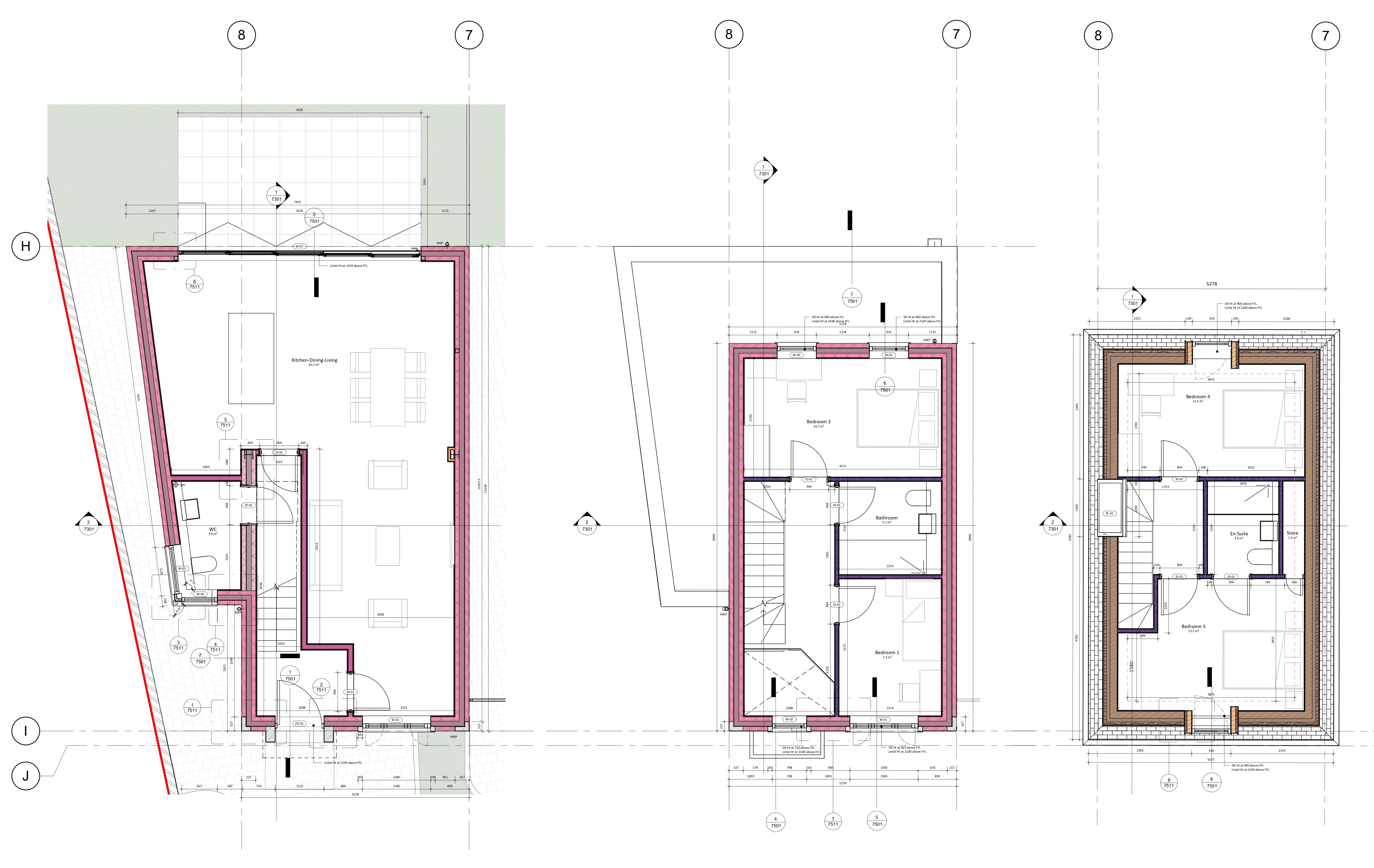
Here is a situation that comes up constantly. Your extension falls comfortably within permitted development. You do not need planning permission. So you build it, and everyone is happy.
Then three years later you try to sell, and the buyer's solicitor asks for evidence that the extension was lawful. You do not have any. The sale stalls while you scramble for retrospective proof, and the buyer starts wondering what else might be wrong with the house.
A Lawful Development Certificate, usually shortened to LDC, is how you avoid that. It is the council formally confirming in writing that what you built, or what you propose to build, did not need planning permission.
What an LDC actually is
It is not planning permission. That distinction matters. Planning permission is the council granting you the right to do something you would not otherwise be allowed to do. An LDC is the council confirming you already had that right under permitted development.
There are two types, and people mix them up constantly.
A proposed use certificate is applied for before you build. You submit drawings of what you intend to do, the council checks it against the permitted development rules, and confirms it is lawful. This is the one most homeowners want.
An existing use certificate is applied for after the fact, for work already carried out. It confirms that what is already standing is lawful, either because it fell within permitted development at the time, or because enough time has passed that enforcement is no longer possible.
Why bother if you do not legally need one
You are not obliged to get one. Permitted development rights exist whether or not the council has confirmed them. But there are four solid reasons homeowners get one anyway.
Selling the house. This is the big one. Conveyancing solicitors routinely ask for evidence that alterations were lawful. Without a certificate you are relying on the buyer's solicitor accepting your word, and many will not. In the worst case the buyer requires indemnity insurance, which costs money and flags the property as having an issue.
Certainty before you spend. Permitted development rules are more complicated than they look. Whether your house counts as a dwellinghouse, whether previous owners already used up the allowance, whether an Article 4 direction applies, whether you are within a conservation area boundary that runs down the middle of your street. A certificate removes the guesswork before you commit a construction budget.
Protection against enforcement. If a neighbour complains and the council investigates, a certificate ends the conversation immediately. Without one, you are arguing the technical detail of permitted development rules with an enforcement officer, from a position of having already built the thing.
Mortgage and remortgage. Lenders increasingly ask about alterations. A certificate makes that part of the process disappear.
Worth knowing: an LDC application is decided on fact and law, not on planning merit. The council cannot refuse it because they dislike the design. Either it meets the permitted development criteria or it does not. That makes the outcome far more predictable than a planning application.
What it costs and how long it takes
The application fee to the council for a householder LDC is currently half the cost of a full householder planning application. Fees are set nationally and change periodically, so check the current figure on your borough's website or the Planning Portal before budgeting.
On top of the council fee you need drawings. Existing and proposed plans and elevations, drawn accurately and to scale, plus a site location plan. If you are already having design work done, this is marginal extra cost. If you are applying for something already built, budget £600 to £1,500 for measured survey and drawings depending on the size of the property.
Determination normally takes eight weeks, the same statutory period as a planning application. Some boroughs are quicker on LDCs because the assessment is more mechanical.
When an LDC will not help you
There is no point applying if your project genuinely needs planning permission. The council will simply refuse, and you will have spent the fee finding out what a competent designer could have told you for free.
Common situations where permitted development does not apply:
Your property is in a conservation area and the work is of a type that conservation status restricts. Your property is listed, in which case permitted development rights are heavily curtailed and listed building consent is a separate requirement. An Article 4 direction has removed the relevant rights, which is common in parts of London including Bedford Park in Chiswick. The property is a flat or maisonette, since permitted development rights for extensions apply to houses, not flats. Or the previous owner already used the allowance, because it attaches to the property, not to you.
The four year and ten year rules
For work already built without permission, time can make it immune from enforcement. Historically this was four years for building operations and changes of use to a single dwelling, and ten years for other changes of use and breaches of condition.
These time limits have been subject to legislative change, and the position is not the same for work carried out at different dates. If you are dealing with unauthorised work and hoping to rely on the passage of time, get current specialist advice rather than relying on a general guide, because getting the applicable period wrong is an expensive mistake.
How to give yourself the best chance
LDC applications are refused more often than people expect, and almost always for the same reason: the drawings do not demonstrate compliance clearly enough.
The council is checking specific measurements against specific rules. Depth of the extension from the original rear wall. Height at the eaves. Total height. Proportion of the garden covered. Materials matching the existing house. Whether the original house means the house as built or as it stood in 1948.
If your drawings do not show those dimensions explicitly, the officer cannot verify compliance and will refuse rather than guess in your favour. Dimensioned drawings with the relevant limits annotated turn a marginal application into a straightforward one.
The word "original" catches people out repeatedly. Permitted development allowances are measured from the original house, meaning as it stood on 1 July 1948 or as first built if later. A previous owner's 1990s extension counts against your allowance even though you did not build it.
How we approach it
We check the planning position for every property before any design work starts. That means confirming conservation area status, checking for Article 4 directions, reviewing the planning history for previous extensions, and establishing whether the property is listed.
Where a scheme falls within permitted development, we will usually recommend applying for a certificate anyway. The cost is modest against the construction budget and it removes a problem that otherwise surfaces years later at the worst possible moment.
Where it does not, we tell you early, and design toward a full planning application instead of wasting eight weeks proving something that was never going to succeed.