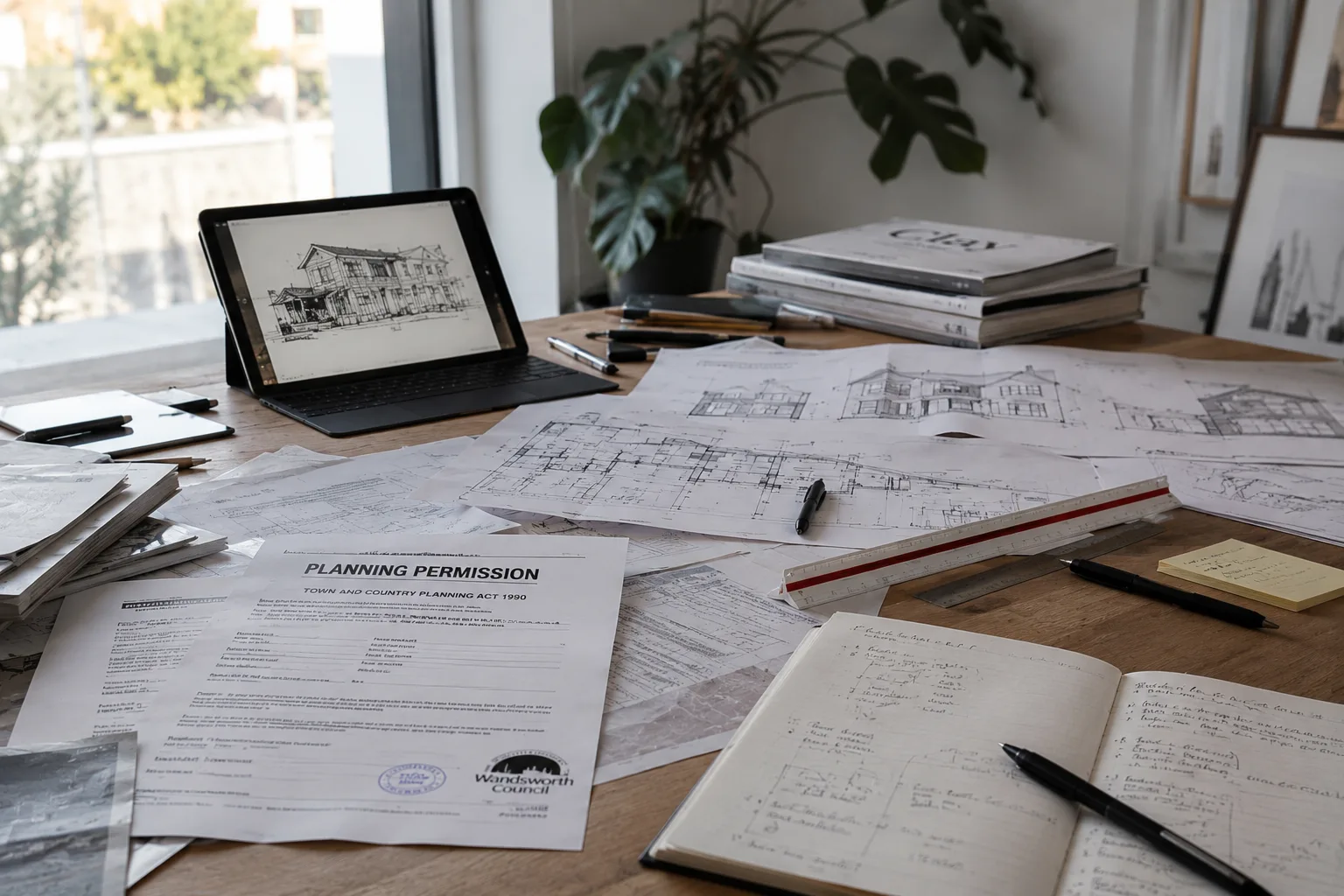
The decision notice arrives and it says refused. It is a bad afternoon. But a refusal is not a verdict on whether your project can happen, it is a document telling you exactly why this particular version did not succeed, and that is genuinely useful information.
Roughly one in five householder applications in London is refused. Most of those homes eventually get built. The difference is what the owner does in the following month.
First, read the reasons properly
Every refusal lists numbered reasons. This is the most important document in the whole process and most people skim it while annoyed.
The reasons fall into two categories, and telling them apart determines everything that follows.
Fixable reasons relate to the specific design. The extension is too deep, the dormer is too large, the materials are wrong, it overshadows next door's window, the roof form is unsympathetic. These are solvable by changing the drawings.
Fundamental reasons relate to the principle. The site is in the Green Belt, the use is unacceptable, the plot cannot take another dwelling, or policy simply prohibits what you are proposing. These are not solved by a redesign.
Also look at the officer's report, which is published alongside the decision on the council's planning portal. It usually contains more detail than the notice and often signals what the officer would have accepted. That is close to a roadmap.
The key question: is the refusal about how you proposed to do it, or about whether it can be done at all? Almost every successful recovery starts with answering that honestly.
Option 1: Resubmit a revised application
This is the right answer most of the time, and the one most people skip past on their way to thinking about appeals.
You redesign to address each stated reason for refusal and submit again. If you submit within twelve months of the refusal, on the same site and for substantially the same development, you are normally entitled to one free go. The council fee is waived.
Time: 8 to 12 weeks for determination, plus redesign time.
Cost: no council fee if within the free go, plus revised drawings.
Success rate: high, where the reasons were design-related and you have genuinely addressed them.
Before resubmitting, request a pre-application meeting or at least speak to the case officer. They have already told you what was wrong. Confirming that your revision fixes it costs one phone call and dramatically improves the odds.
Option 2: Appeal to the Planning Inspectorate
An appeal takes the decision away from the council and puts it in front of an independent inspector. It is the right route when you believe the council applied policy incorrectly, or when the refusal was driven by local objection rather than planning grounds.
You have twelve weeks from the decision date to appeal a householder application. Miss it and the right is gone.
Most householder appeals are decided by written representations, meaning no hearing. You submit a statement, the council responds, an inspector visits the site and issues a decision.
Time: typically 12 to 20 weeks for a householder appeal, sometimes longer.
Cost: no fee to the Planning Inspectorate for a householder appeal. If you use a planning consultant to prepare the statement, budget £1,200 to £3,500.
Success rate: nationally around a third of householder appeals succeed. Better than most people expect, worse than most people hope.
Appeal when the council got the policy wrong. Do not appeal simply because you disagree with their judgement on design, because an inspector will usually defer to the local authority on matters of visual amenity.
Option 3: Reduce the scheme to permitted development
Sometimes the fastest route is to stop asking. If a smaller version of the project falls within permitted development, you do not need permission at all.
An extension refused at four metres deep might be entirely lawful at three. You lose a metre and gain certainty and about six months.
This only works if permitted development rights actually apply to your property. They are removed in some conservation areas, by Article 4 directions, on listed buildings and on flats. Where it does work, apply for a lawful development certificate so you have written confirmation.
Time: 8 weeks for a certificate, or start immediately if you are confident.
Success rate: essentially certain if the scheme genuinely complies.
Option 4: Accept it and rethink
Where the refusal is fundamental rather than design-related, the honest answer is sometimes that this project is not happening on this site in this form. A designer who tells you that early is doing you a bigger favour than one who takes a fee to appeal something unwinnable.
That does not always mean giving up on more space. A refused rear extension might become a loft conversion. A refused basement might become a garden room. Reframing the brief often gets people to a good outcome by a different route.
Why applications actually get refused in London
The most common reasons, roughly in order:
Overdevelopment. Too much bulk for the plot. The extension dominates the original house rather than reading as subordinate.
Impact on neighbouring amenity. Loss of light, overlooking, or an overbearing sense of enclosure. This is the most common single reason on terraced and semi-detached houses.
Design and character. Materials or form that do not respond to the existing building or the street, particularly in a conservation area.
Roof form. Dormers that are too large or too prominent, or mansards on streets where the roofline is a defining characteristic.
Incomplete information. Missing drawings, no heritage statement where one was required, inadequate detail. Frustrating, and entirely avoidable.
How to avoid the refusal in the first place
Check the planning position before designing anything. Conservation area, listing, Article 4 direction, previous applications on the property and what happened to them.
Look at recent approvals and refusals on your street through the council's planning portal. It is public, free, and tells you what this specific council accepts on this specific type of house better than any general guidance.
Use pre-application advice on anything unusual, in a conservation area, or on a listed building. It costs a few hundred pounds and adds four to eight weeks, and it is consistently cheaper than a refusal.
Talk to your neighbours before you submit. A large share of refusals are driven by objections, and many objections come from people who first learned about the project from a council notice tied to a lamp post.
If you have had an application refused and want a second opinion on whether it is recoverable, send us the decision notice and the drawings. We will tell you which of the four routes above we would take, and whether we would take it at all.