Clapham · South West London
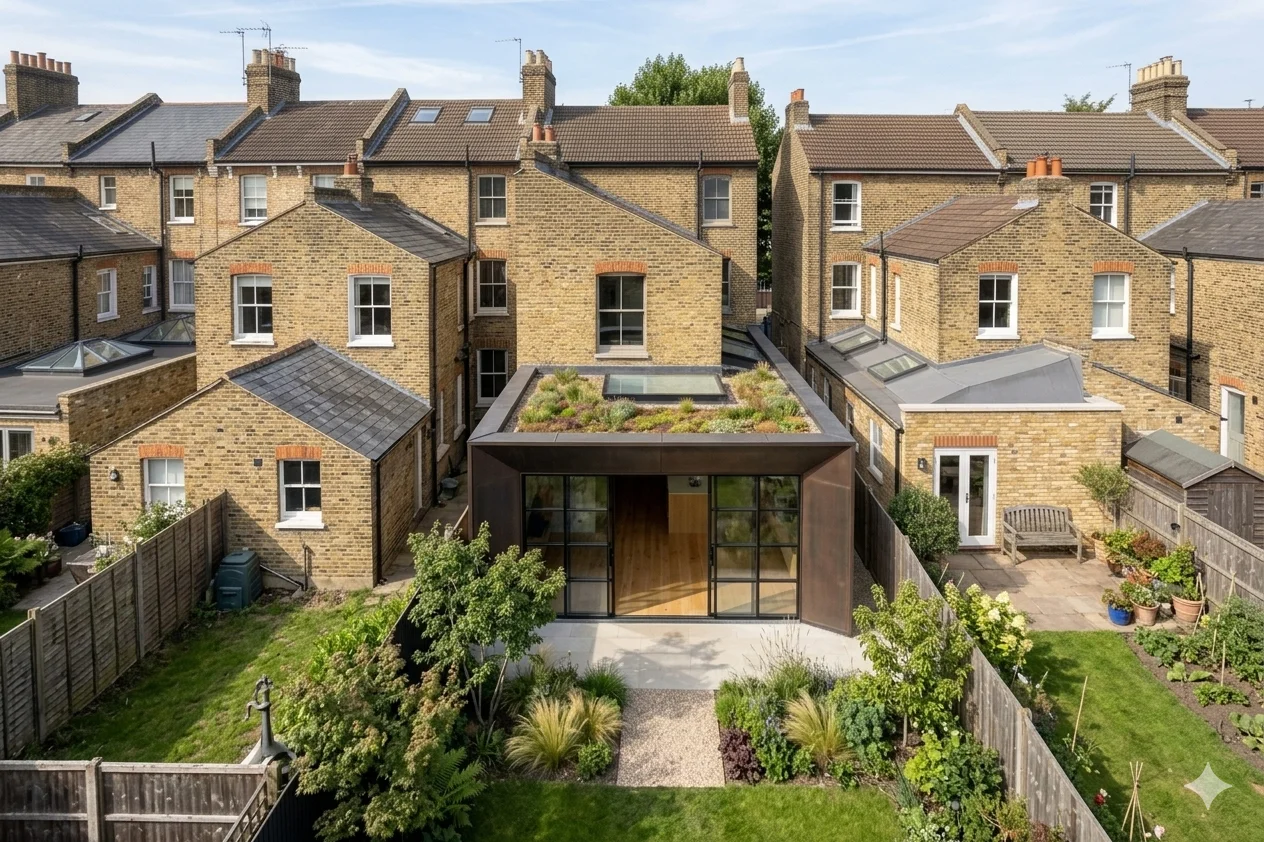
SW4 has an unusual density of conservation areas, and which one you happen to sit in changes the answer entirely. Clapham is Victorian terrace heartland, which means side returns, rear extensions and loft conversions, all assessed against a character that Lambeth guards closely.
Discuss Your Project
Working in Clapham
Clapham is dominated by Victorian and Edwardian terraces, most with the narrow side passage that makes a side return extension the obvious first move. Filling that alley typically adds a metre or more of width across the full depth of the ground floor, and combined with a rear extension as a wraparound it transforms the plan.
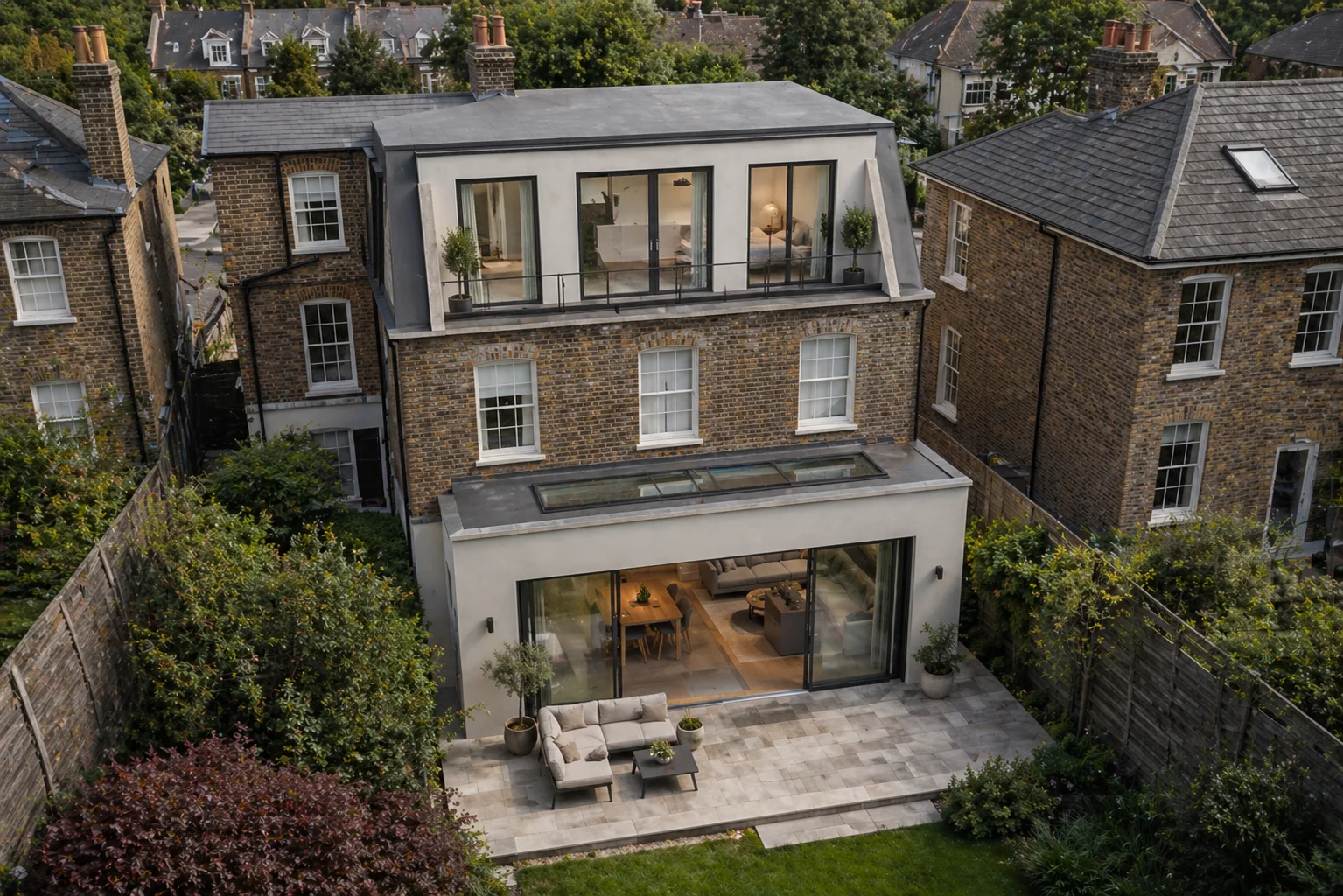
Loft conversions are equally common and searched more heavily here than extensions. Most Clapham terraces are good candidates, and outside the conservation areas many still qualify under permitted development. Lambeth is generally receptive to rear dormers even where permission is needed. Front dormers are a different matter and are consistently difficult.
We design and build under one contract, which matters on terraced work where party wall agreements, restricted access and neighbour coordination all run in parallel.
Services in Clapham
Clapham sits in the London Borough of Lambeth. The borough has 62 conservation areas and applies Article 4 directions in a targeted way rather than borough-wide, so the exact address genuinely decides the route your project takes.
We check the planning position for every property before design work starts, because in SW4 two houses a street apart can face very different requirements.
Planning in Clapham
SW4 is unusually dense with designations. Four carry Clapham in the name: Clapham, Clapham Park and Northbourne Road, Clapham High Street and Clapham Road. Several more catch houses in and around SW4, including Rectory Grove, Abbeville Road, The Chase and Sibella Road.
Inside any of them, permitted development is reduced. Side extensions and roof extensions lose their permitted route and a full planning application is required. Extensions, lofts and elevation changes are assessed against the established character of that specific area, and the older stock around Clapham Old Town frequently brings listed building considerations too.
Lambeth also has around 12 Article 4 areas, applied to specific estates rather than the whole borough. Basement and subterranean work is a recognised local issue and the council's design guide sets detailed structural and construction management requirements.
Cost Guide
Construction costs in Clapham typically range from £2,800 to £4,200 per square metre depending on specification. A side return extension usually costs between £70,000 and £140,000, and a wraparound £90,000 to £180,000.
Loft conversions range from £55,000 to £110,000 depending on type, with mansards at the upper end. Basement projects generally start from around £180,000.
Professional fees add 10 to 15 percent. See our extension cost guide and loft conversion cost guide for detail.
Cost Calculator
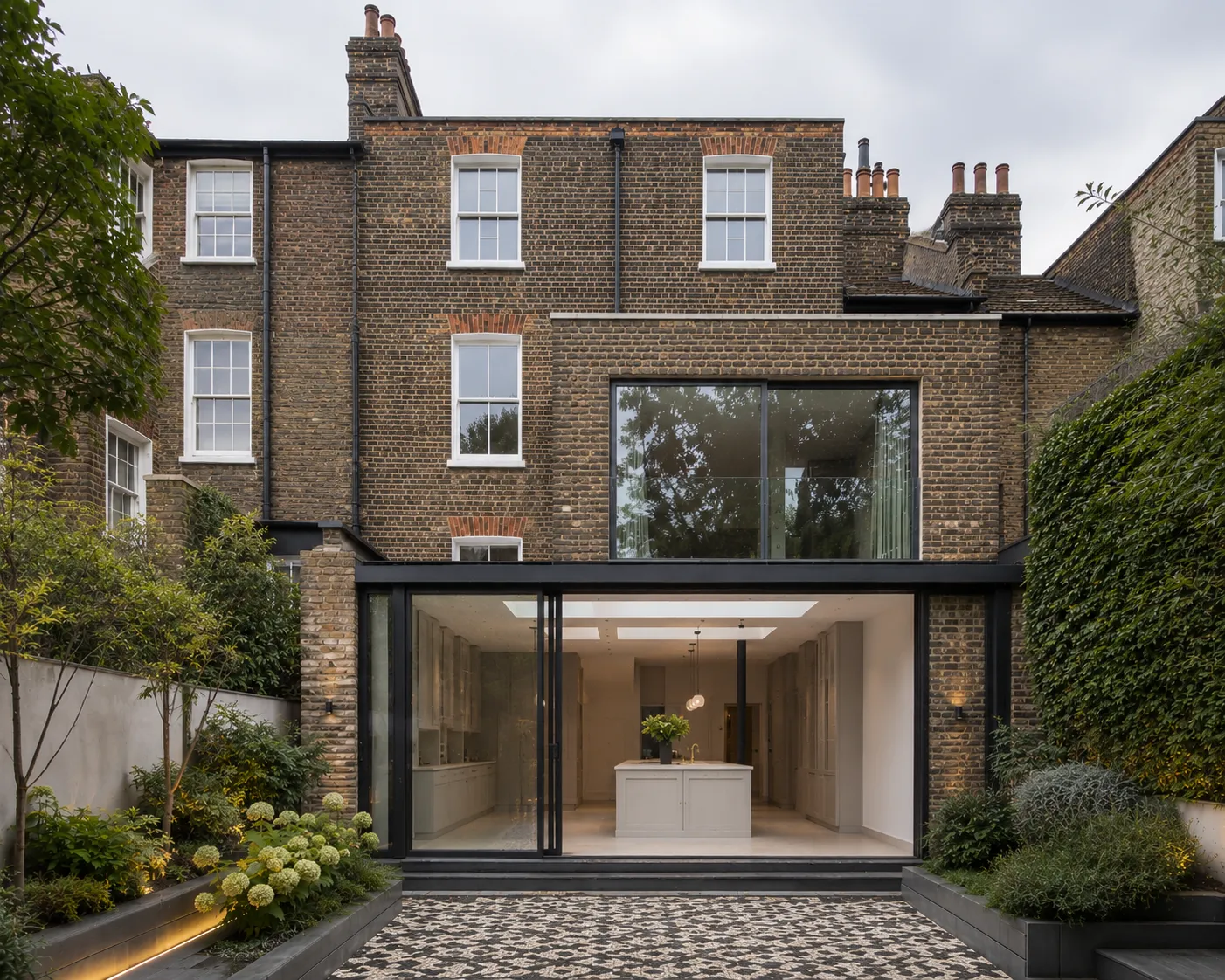
Tell us the size, location and finish level. Our calculator returns a realistic range for your extension or loft conversion, with a detailed breakdown available.
Property Types
Clapham has a broader range of housing than its Victorian reputation suggests. Clapham Old Town holds Georgian and early Victorian houses, some of the oldest in the area and the most closely controlled. The streets around Abbeville Road are classic Victorian terraces and villas, and this is where most side return and loft work happens.
Toward the Common there are 1930s mansion blocks, which are flats and therefore have no permitted development rights for extensions at all. The wider SW4 grid is consistent late Victorian terracing with the rooflines and dormer patterns that the conservation area appraisals are written to protect.
Nearby Areas
Alongside Clapham we take on projects in Clapham Old Town, Abbeville Road, Clapham Park, Clapham North and Clapham South. We also work across Wandsworth, Putney and Wimbledon.
Beyond South London we cover all of Greater London and within a 30-mile radius, including Chelsea, Fulham, Richmond, Bromley and Surrey.
Planning Checker
Enter your postcode and we check it against the national planning dataset for conservation areas, Article 4 directions and listed status, then tell you which rules apply to your project.
Common Questions